
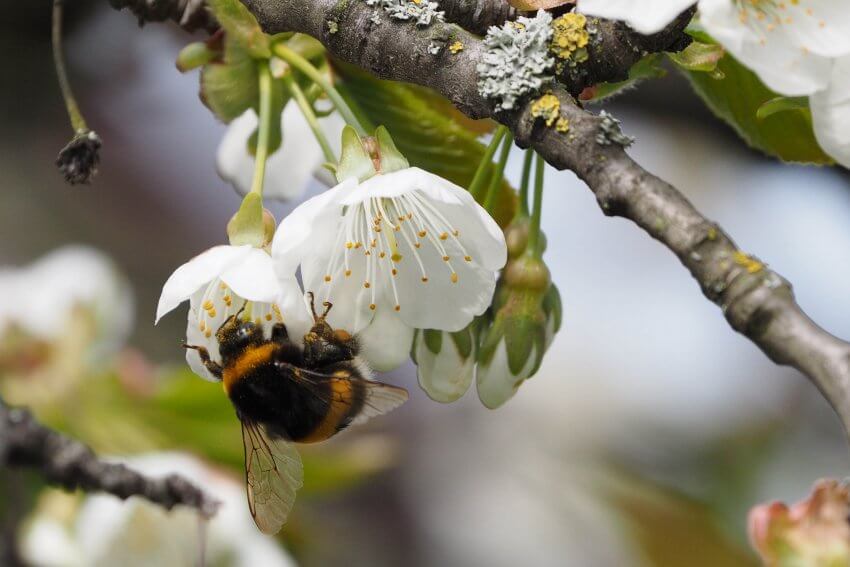
Within our EU-funded project RestPoll, we bring together scientific evidence in a new policy brief that identifies the most effective renaturation measures to support pollinators – such as wild bees – across Europe.
Pollinators are fundamental to biodiversity, food production, and ecosystem stability. Yet their populations continue to decline due to habitat loss and highly intensive land use. With the policy brief we provide practical, science-based guidance to reverse this trend.
Key Messages
The policy brief highlights two central priorities:
1. Create more high-quality and interconnected habitats
Pollinators thrive in diverse landscapes. Expanding and reconnecting habitats enables species to move, forage, and reproduce successfully. Ecological corridors and restored semi-natural areas play a crucial role in strengthening pollinator populations.
2. Reduce the intensity of highly intensive land use
This includes:
- Reducing pesticide use
- Adapting mowing regimes
- Implementing pollinator-friendly grazing systems
Supporting the EU Nature Restoration Regulation
RestPoll provides concrete, evidence-based recommendations to support EU Member States in implementing their Nature Restoration Plans under the EU Nature Restoration Regulation (NRR).
By offering practical and verifiable measures, the policy brief helps ensure that restoration efforts are not only ambitious but also effective and measurable.